I built a panel for the window beside the bench and ran a short length of duct from a port in that panel to an inline fan at the desk, so I could pull the smoke away while I soldered.
The panel
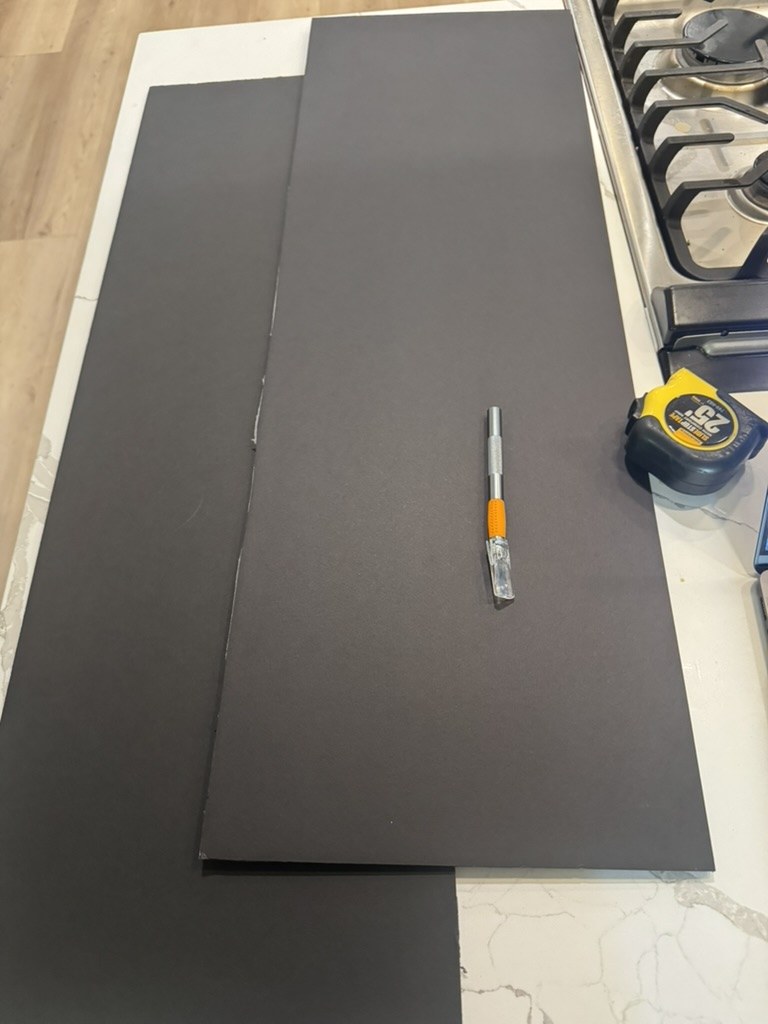
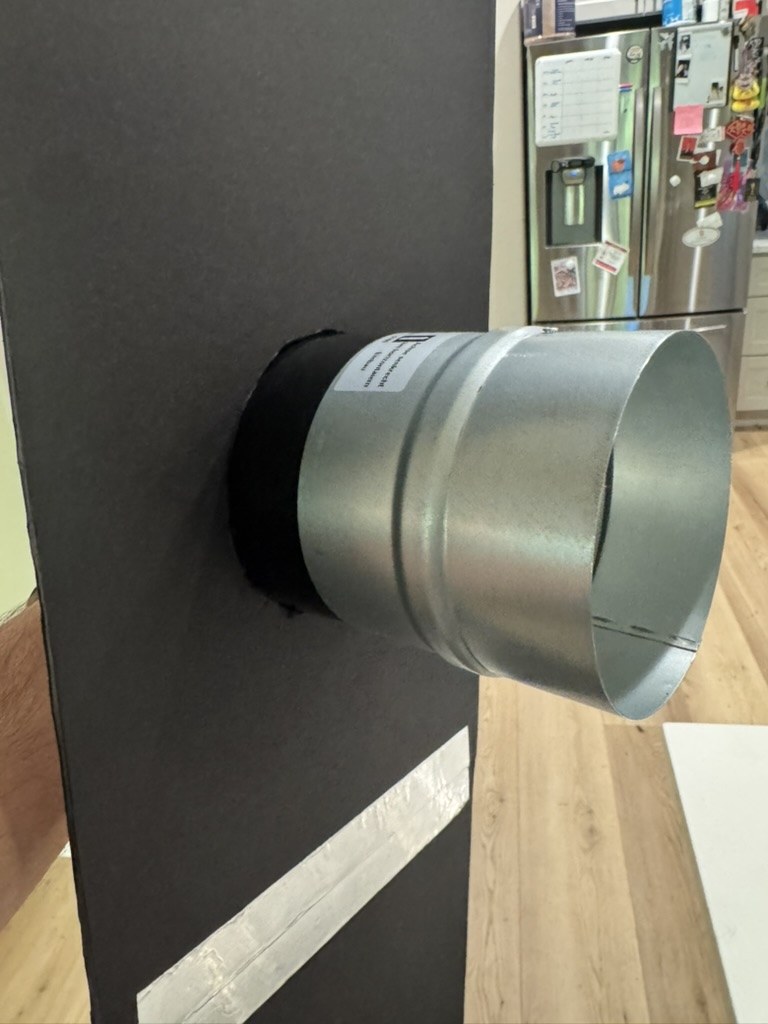
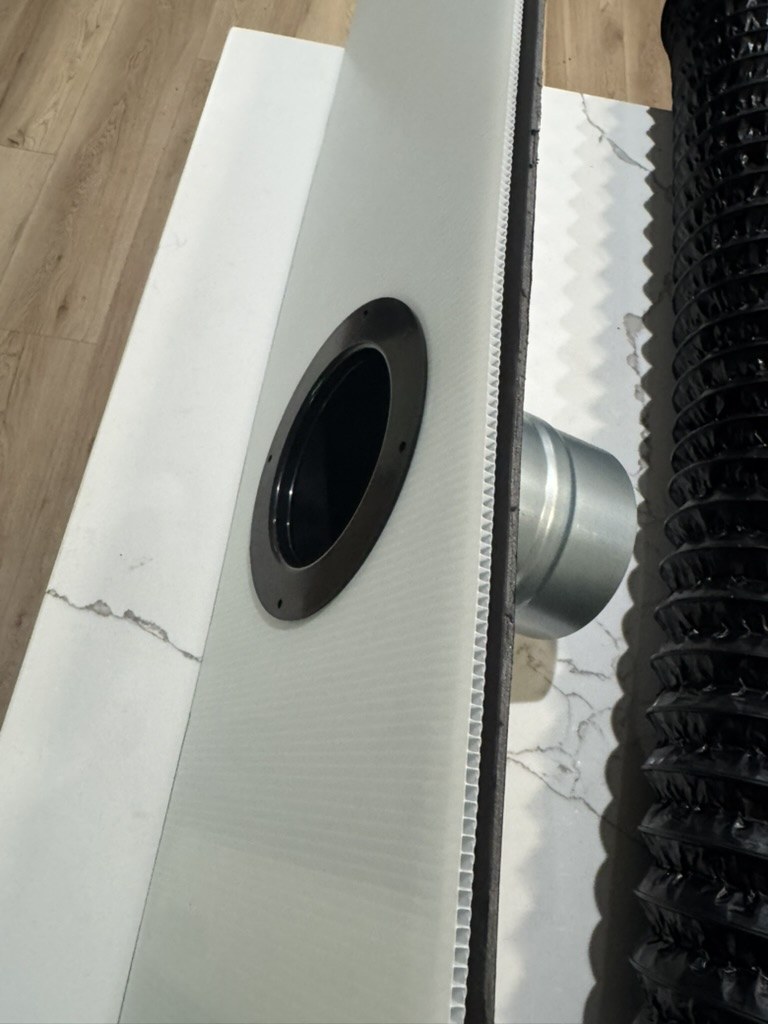
I started at the kitchen counter, with two sheets of black foam board, a hobby knife, and a 25-foot tape measure, and cut a panel to go in the window. A galvanized metal collar went through a round hole in the foam, and I put foil tape along a seam in the panel. For the other face I used a sheet of white corrugated plastic, with a black round flange around the opening, the metal collar on the far side, and the flexible ducting waiting beside it.
At the window
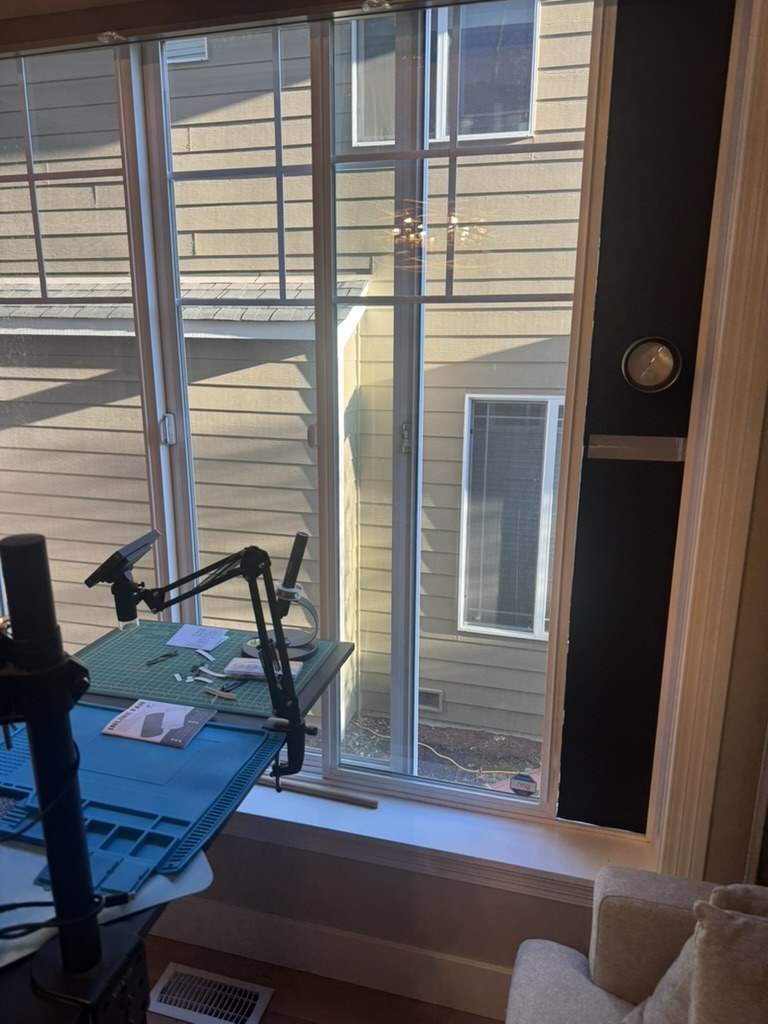
The finished panel sits in the open window beside the bench, with the round port facing the room. The panel’s seal in the window is an understandably imperfect, amateur craftsman’s seal, and I’ll leave it at that.
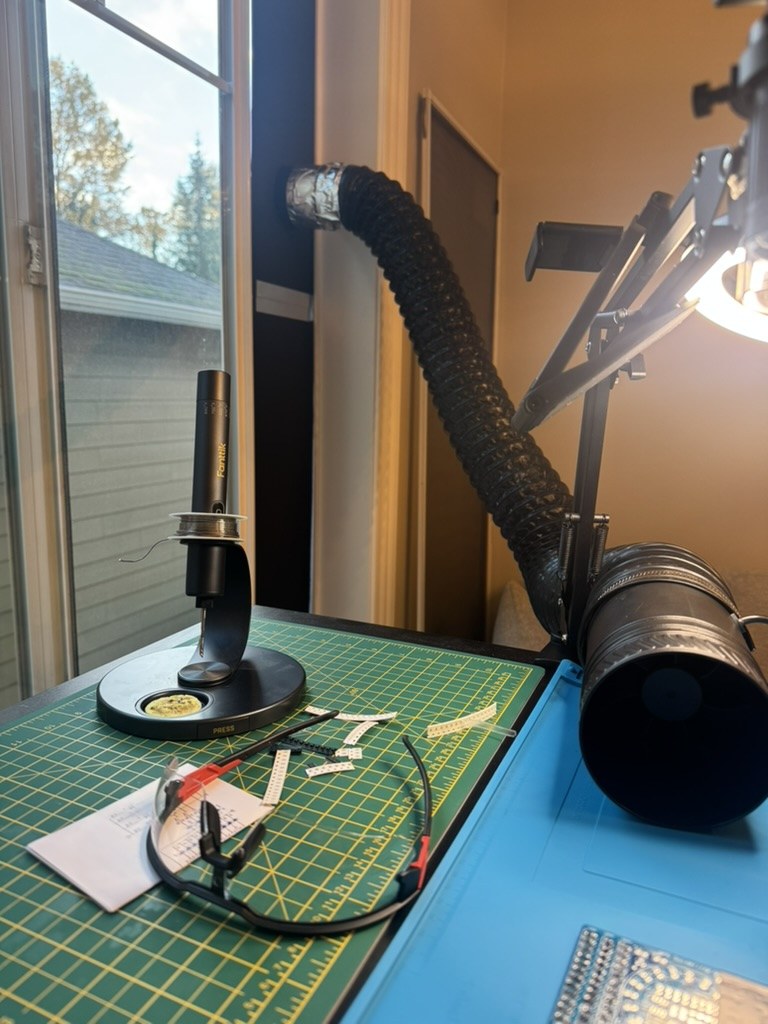
From there, about 51 inches of 4-inch flexible duct runs from the window port down to a 4-inch inline fan I have at the bench. It is a cheap fan from Amazon, and I don’t know the brand; it has a variable-speed knob. The Fanttik iron sits in its stand right next to that run of hose.
The damper
The damper flap caused me some problems at first. It would not open, because it was catching on the plastic collar inside the flange, and when I fiddled with it I overstressed the hinge, which is cheap and a little flimsy. After another couple of minutes of working it with my fingers, I have a reliable flap that opens and lets the smoke out when I turn the fan on. As for whether it fully closes when I turn the fan off, I’m not completely sure, but if the house starts feeling a bit more frigid in this November weather, I’ll have an idea of why.